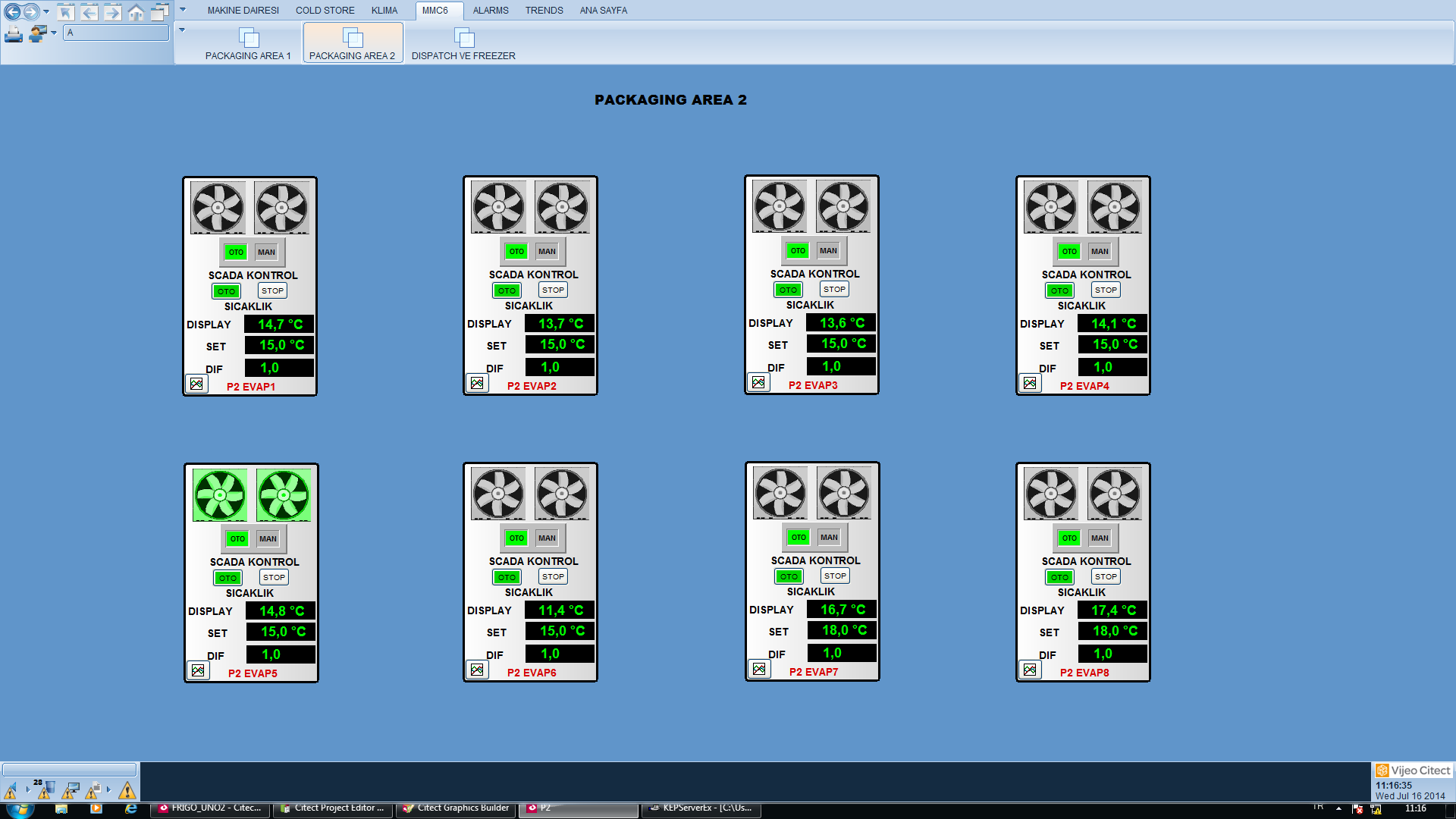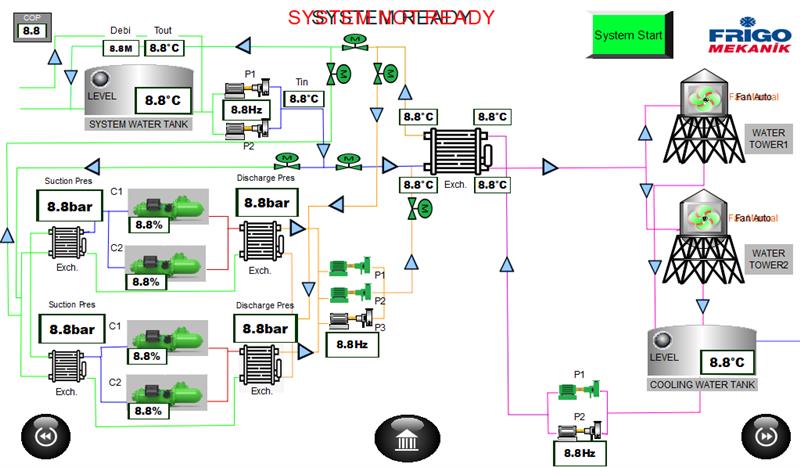
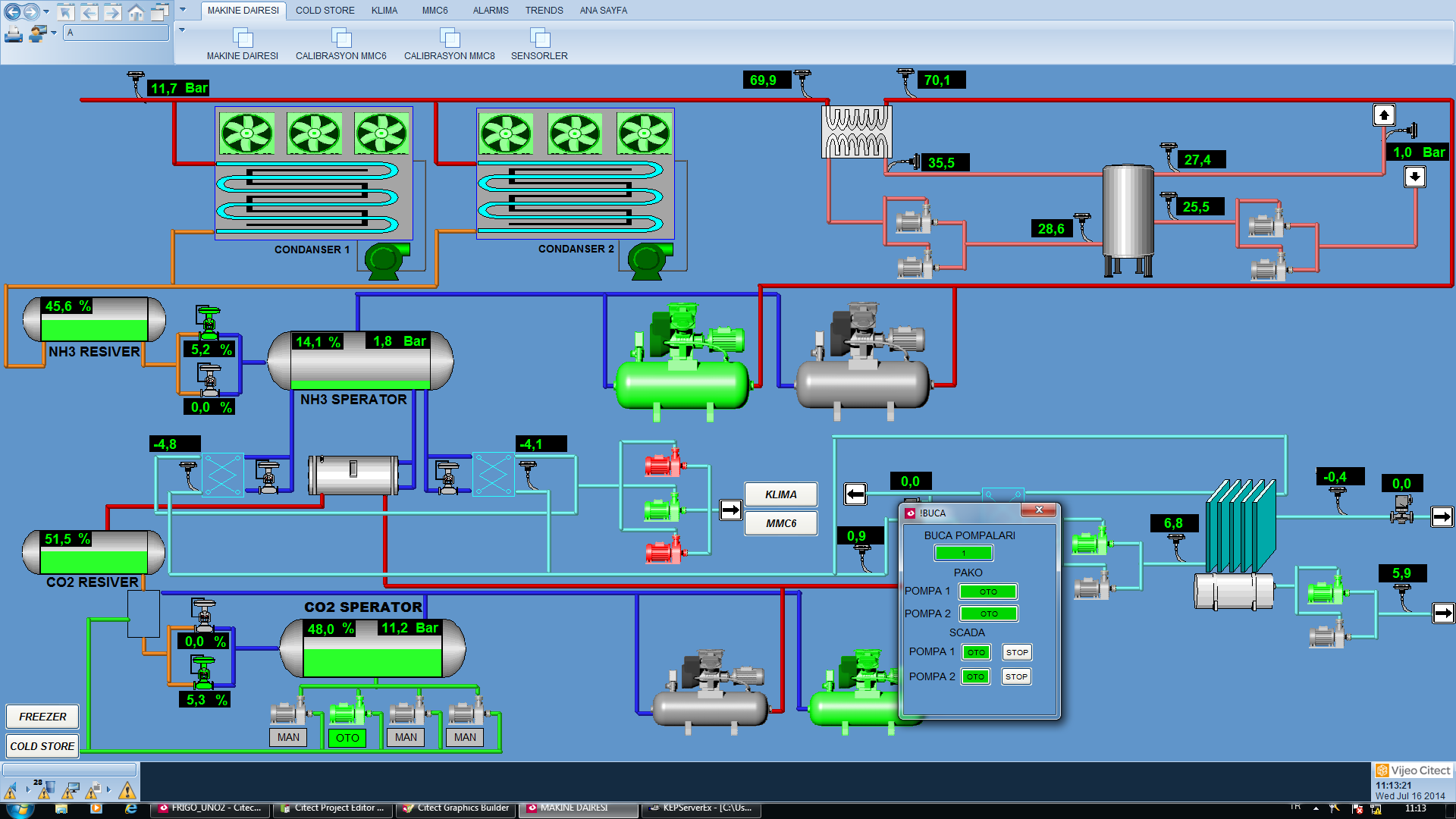
Within refrigeration system automation, the following control processes are executed:
i. Temperature-Humidity-Pressure Control: Ensures that the refrigerated area remains within the desired values (temperature, humidity, and pressure).
ii. Compressor Control: Activates or deactivates compressors in stages to achieve the desired setpoints. If an inverter is present, it adjusts the frequency according to the cooling demand, optimizing energy consumption.
iii. Fan Control: Manages evaporator and condenser fans by activating or deactivating them in stages to maintain optimal conditions. If an inverter is available, it adjusts fan speed based on system requirements, enhancing energy efficiency.
iv. Defrost Control: Activates and deactivates heating elements in real time or based on a preset schedule to prevent excessive frost buildup.
v. Auxiliary Outputs: Enables various functions such as curtain operation, door opening/closing, and lighting control.
vi. Alarms: The following alarms can be activated to ensure proper system monitoring:
Alarms can be monitored via the device interface, detected through an integrated buzzer, or signaled with external visual or audible alerts. Through remote monitoring, alarms can be transmitted to authorized personnel via SMS, fax, or email using dedicated software and devices.
vii. Remote Monitoring: Given the physical separation of management, administrative, and technical units within the cold chain, real-time system tracking has become essential. A remote monitoring infrastructure using local or internet connections enables the following functions: